Economic Report: Autumn 2026
Economic data is slowly turning positive
As the Swiss economy grows, the Swiss textile and clothing sector also appears to be gradually recovering. Although the sector is growing only slightly and from a low base, a positive trend can be seen when viewed as a whole. This gives rise to hope that the worst is now finally behind us.
Following a difficult first half of the year, there are now also early signs of a recovery in the Swiss textile and clothing sector. Whilst the Swiss economy as a whole experienced a turnaround as early as the first few months of the year, an improvement for the sector is only beginning to emerge in the third quarter.
However, the international environment remains challenging. Demand from abroad remains rather low, and prices for raw materials and energy remain high. A turnaround would be needed here too for the situation to ease significantly.
Manufacturing sector rates business conditions as better than they have been for a long time
The textile and clothing manufacturing sector, in particular, appears to be on the up at the moment. The assessment of the business situation has reached its highest level since August 2024, with a net balance of ten points. This was primarily due to rising order expectations towards the end of the third quarter. As a result, production capacity utilisation has risen again to 76 per cent – albeit still very low by long-term standards.
Wholesale trade: The situation is better but not yet good
The wholesale sector also continues to show a positive trend, although the balance remains in negative territory. Whilst the situation is not yet good, it has improved. This figure, too, is at its highest level since October 2023. This development fuels hopes that the worst is now behind us.
A volatile retail sector
The ups and downs are clearly illustrated by the example of the retail sector. The encouraging trend at the start of the summer months came to an abrupt end at the close of the third quarter.
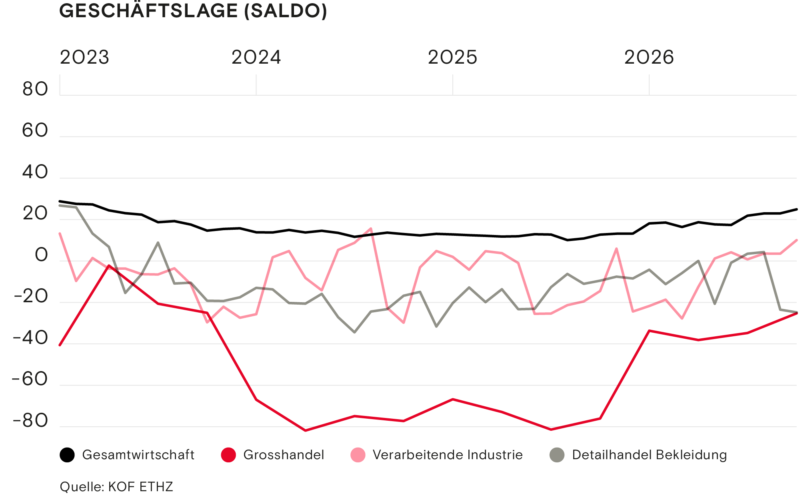
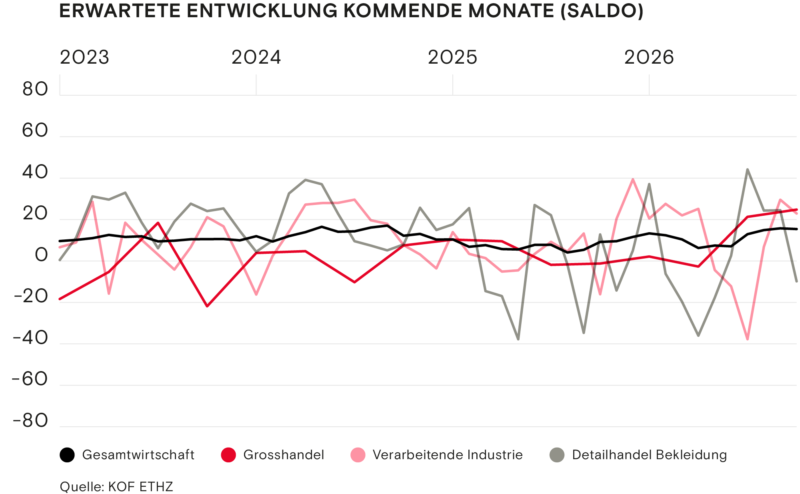
The business situation reflects the company’s overall economic condition. Survey respondents answer the question: ‘We currently assess the business situation as good, satisfactory or poor overall.’ The companies’ expectations mentioned below are based on various questions regarding the expected business situation, order book or turnover over the next three to six months. Here, too, there are three possible answers (‘better’, ‘neutral’ and ‘worse’). As the wording of the questions varies slightly between sectors, a direct comparison between them is sometimes inaccurate. However, the chart shows the trends for the coming months, which help in making an assessment.
For the two indicators, the seasonally adjusted balance of positive and negative responses is reported. This reflects the trend in developments. In practice, the balances show a high correlation with the actual growth rates of the real indicators. The figures for positive and negative responses (percentages in the text) are not seasonally adjusted. (Source: KOF ETHZ)
Foreign trade – a focus on individual markets
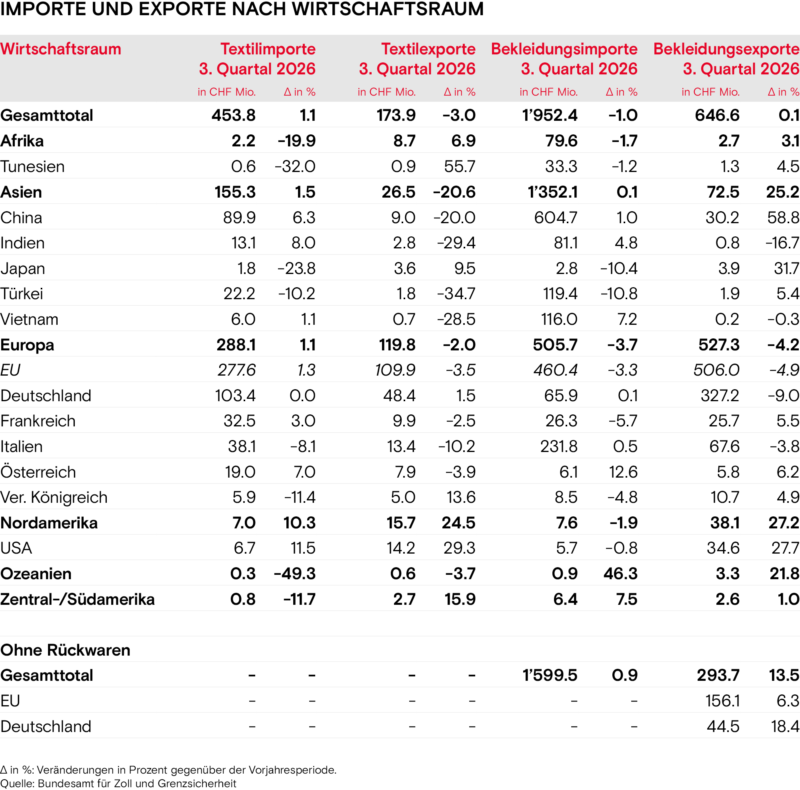
Foreign trade also appears to be stabilising. In overall trade, imports of clothing are still slightly down, but after deducting returned goods, they rise by almost one per cent to 1.6 billion Swiss francs. Clothing exports grew by over 13 per cent, thanks to stronger demand from Germany.
Technical textiles and non-wovens: a hit – woven fabrics: a flop
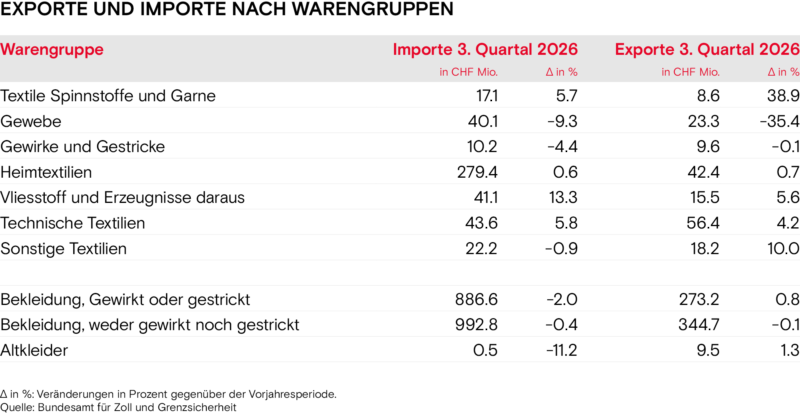
The situation for textiles is not quite so rosy. Whilst imports here also grew by 1.1 per cent, exports fell by three per cent compared with the same quarter last year. The reason for this is weak demand in Asia, particularly in India and China. Demand from Italy also fell, especially for woven fabrics, imports of which declined more sharply. Technical textiles and non-woven fabrics, on the other hand, are on the rise.
Trade with the US stood out in particular in the third quarter: following the shock in August 2025 and the threatened 39 per cent tariffs, the customs situation eased significantly again this year – exports even increased by up to 30 per cent.
Labour market situation
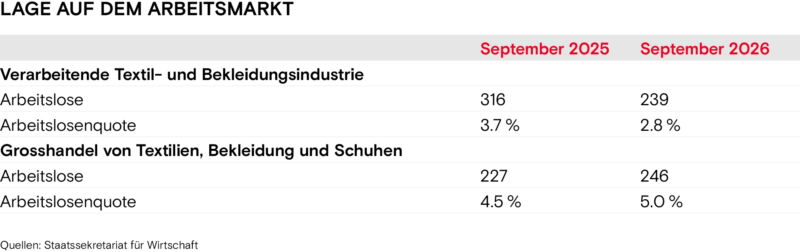
The unemployment rate in the manufacturing sector continues to fall. Having stood at 3.1 per cent in the previous quarter, it stood at 2.8 per cent at the end of the third quarter. This represents a fall of 0.9 per cent compared with the previous year.
In contrast, the unemployment rate in the textile wholesale sector is rising. In September 2026, it stood at five per cent, half a percentage point higher than the previous year. However, according to survey data, this figure is likely to stabilise in the coming months.
Outlook and expectations
Both the wholesale sector and the manufacturing industry anticipate positive developments for the end of the financial year. In line with the Swiss economy as a whole, both sectors expect orders to grow. At the same time, the sector anticipates a further rise in prices, which could, at most, slow the upturn down slightly once again.
Only in the clothing retail sector did the outlook turn negative again, particularly in the final month of the quarter. Both within the sector and in the retail sector as a whole, respondents expect lower sales growth compared with previous months.
Slightly positive outlook at the end of the year
Overall, the outlook shows that the textile and clothing sector, like the Swiss economy as a whole, is once again anticipating an upturn – albeit a rather tentative one. This is because the volatile situation in recent months has demonstrated just how unexpectedly external shocks can occur. However, the trend is now positive.