Member News
Empa team working on innovative approach to wound treatment
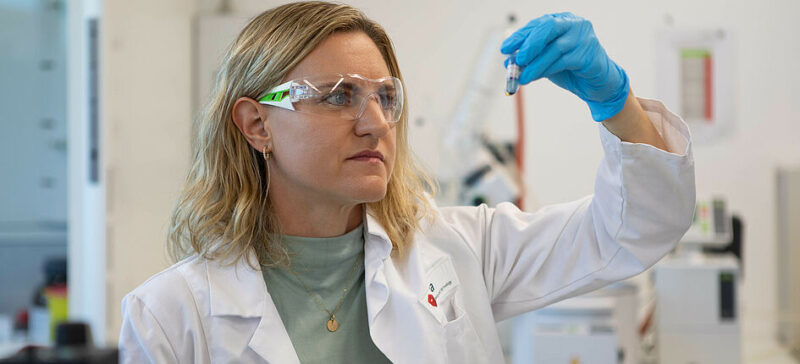
(CONNECT) A team from the Laboratory for Biomimetic Membranes and Textiles at Empa could potentially have paved the way for an innovative method of treating chronic wounds. Researchers at the St. Gallen-based laboratory have developed a material that releases active ingredients in a controlled manner when exposed to light. According to a statement, this could help to improve the efficacy of treatment approaches, in addition to reducing side effects.
To this end, the researchers loaded silica nanoparticles with chlorhexidine, a commonly used wound disinfectant. Thereafter, the nanoparticles were coated with a polymer shell containing special molecular photoswitches, which can be activated and deactivated by way of visible LED light. “When incorporated into a wound patch, this system enables controlled wound disinfection”, as group leader Dr. Luciano Boesel states. “The timing and dose of the released active ingredient can be controlled by varying the duration or intensity of the light exposure and the wavelength of the light”.
In a next step, Boesel explains his vision of combining this light-controlled drug delivery system with a wound sensor that continuously monitors the amount and type of bacteria present in the wound. After all, the silicon dioxide nanoparticles can be loaded not only with a wound disinfectant but also with other therapeutic agents, while various different photoswitches can be added to the polymer shell. “That would be an important step toward personalized wound treatment”, Boesel explains further.
At present, he is on the hunt for PhD students to further develop the system as part of their doctoral thesis. Thereafter, the innovation would have to pass through several phases of clinical trials before it could be approved as part of a medical device. ce/mm